Modern enterprise threats don't respect boundaries between physical and digital systems — and neither should your security strategy. In this Frost & Sullivan VBook, analysts examine how the convergence of cyber and physical risk is creating costly blind spots for organizations across every industry.
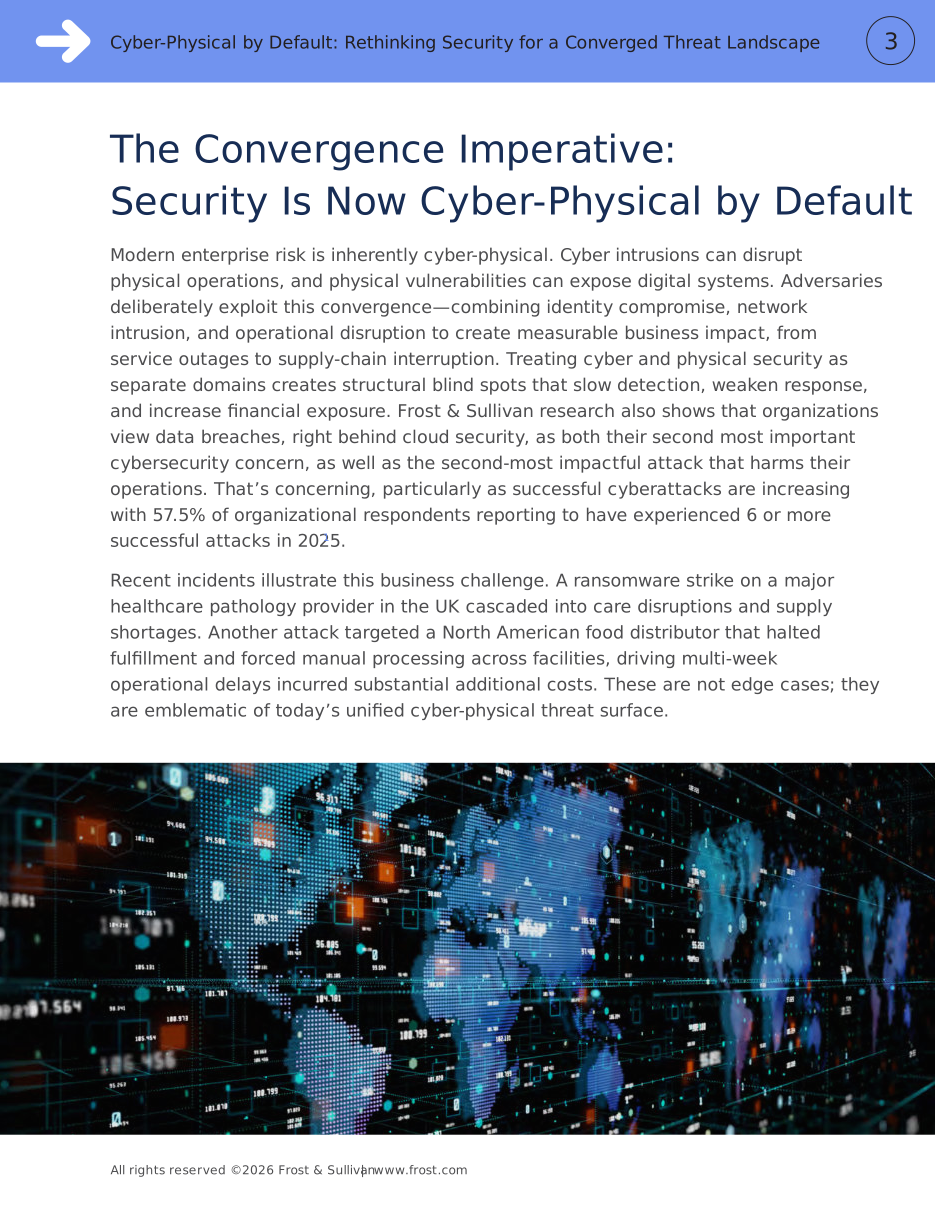
The numbers are stark: 57.5% of organizations experienced six or more successful cyberattacks in 2025, nearly two-thirds of security stakeholders report response times exceeding 24 hours, and the median financial impact of IT disruptions alone reaches $10M per incident. Meanwhile, generative AI is enabling adversaries to develop and deploy novel malware variants in hours — dramatically outpacing legacy detection tools.
To help organizations close the gap, Frost & Sullivan introduces a nine-pillar Predictive Resilience Framework covering real-time intelligence, preemptive detection, cross-domain visibility, AI-native solutions, multimodal signal fusion, alert triage and scoring, seamless integration, client-tailored intelligence, and measurable ROI.
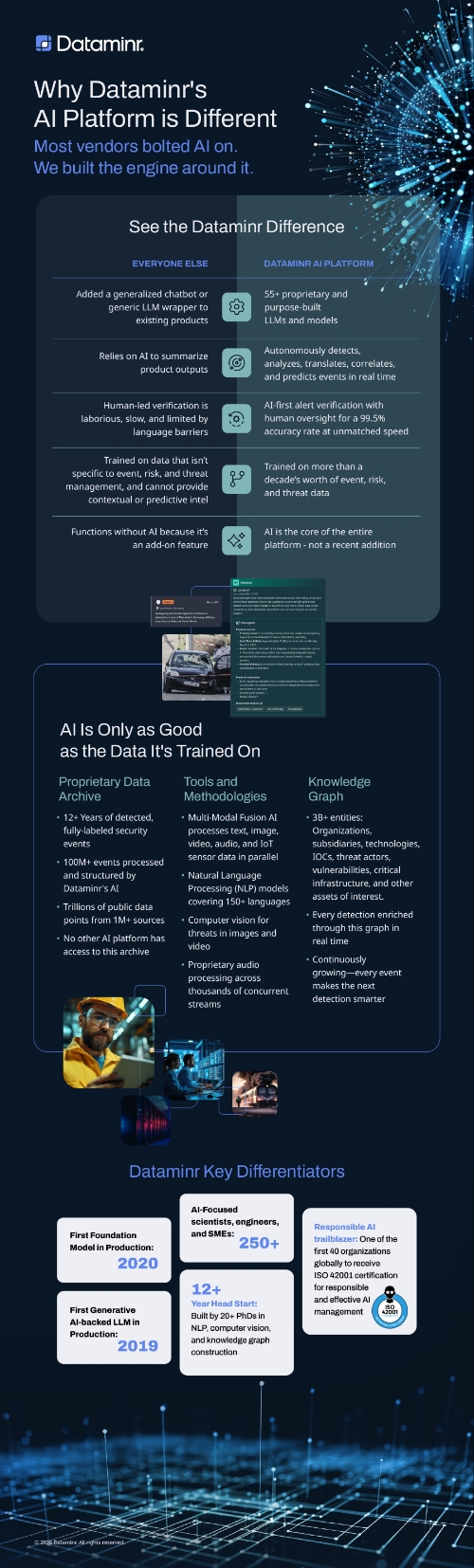
The report also profiles how the Dataminr AI Platform maps to each pillar — delivering over 70% faster incident response rates, analysis of more than one million threat signals across 150 languages, and autonomous investigation capabilities built on 15 years of AI development.
Whether you're a CISO building the business case for AI investment or a security architect evaluating your detection stack, this report provides the data, framework, and solution criteria you need to transform reactive threat response into true organizational resilience.


 Download